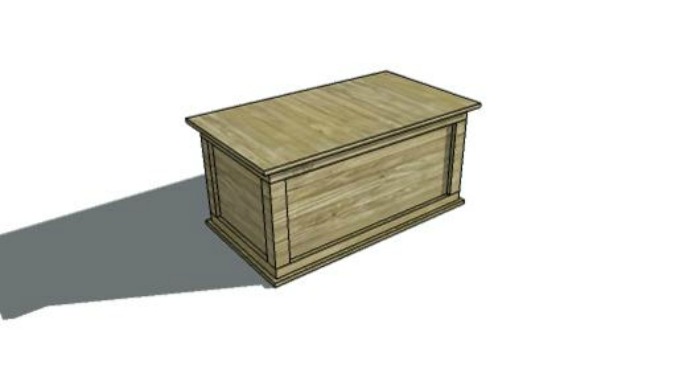
Plans

Project Image
Project Details

Free DIY Furniture Plans to Build a Market Playset! I could not be more excited to share this plan with you kids! *Squeal* I have been eyeing a similar beaut on Pinterest for a while now and I think I need to have one for my very own playspace. Haven't you guys loved playing store for as long as you can remember? I have for sure... Xx...Rayan

Estimated Cost

$50-$75

Dimensions
Dimensions for This Project
Tools
  • Tape Measure
  • Saw – Jig, Circular, or Miter
  • Drill
  • Countersink Bit for Drill
  • Square
  • Sander
  • Kreg Jig
  • Brad Nailer
Lumber
  • List includes lumber for ONE bench, ONE large crate, ONE small crate, and ONE scale
  • 1 – 1” dowel rod at 3’
  • 1 – ¾” square dowel rod at 3’
  • 2 – 1x2 at 6’
  • 2 – 1x3 at 6’
  • 1 sheet of ¾” plywood
Materials
  • 1-1/4” pocket hole screws
  • 1-1/4” screws
  • 1-1/4” brad nails
  • Cotton cord or twine for scale
  • Cotton fabric or a sheet for the canopy
  • Wood filler
  • Sandpaper
  • Wood glue
  • Finishing Supplies
Cut List
  • 6 – 2x2 at 17-1/4” – Legs
  • 2 – 1x3 at 15” – Side Frames
  • 2 – 1x2 at 15” – Side Frames
  • 4 – 1x3 at 21-3/4” – Stretchers
  • 4 – 1x2 at 21-3/4” – Stretchers
  • 2 – ¾” plywood at 18” x 48” – Shelf & Top
  • 1 – ¾”plywood at 12” x 14” – Large Crate Bottom
  • 2 – ¾” plywood at 11-1/4” x 14” – Large Crate Sides
  • 2 – ¾” plywood at 11-1/4” x 13-1/2” – Large Crate Front & Back
  • 1 – ¾” plywood at 8” x 10” – Small Crate Bottom
  • 2 – ¾” plywood at 3-1/2” x 10” – Small Crate Sides
  • 2 – ¾” plywood at 3-1/2” x 9-1/2” – Small Crate Front & Back
  • 1 – ¾” plywood at 3-1/2” x 12” – Scale Base
  • 1 – 1” dowel at 12” – Scale Post
  • 1 – ¾” square dowel at 12” – Scale Arm
  • 2 – ¾” plywood circles at 5” – Scales
  • 2 – 1x3 at 43” – Canopy Supports
  • 2 – 1x3 at 60” – Canopy Supports
  • 2 – 1x3 at 72” – Canopy Supports
Instructions

Before beginning to build, always check in on my site to make sure you have the most up to date set of plans, I occasionally update and change the plans to make the building process easier or to allow for less expensive purchasing of materials! Read through the entire set of instructions and all comments before beginning this project. If you print out or save plans, be sure to check in on my site to be sure you have the most up to date set of plans, as I occasionally update things for ease of building or buying. If you are new to building, read through the GETTING STARTED section and other articles found under the BUILD tab in the menu on my site, it has valuable information about how to get started, tools and techniques. If you are unfamiliar with the finishing process, visit my Finishing school for some tips and tricks for painting like a pro and for special finishing practices. Use glue to secure your joints and Consider Painting or Staining individual sections prior to assembling. This makes the paint application virtually flawless. Coat with a spray on Poly or Wipe on Poly to protect your finish and your piece and it will last for ages. Adhere to all safety standards and guidelines, and be sure you follow safety protocol throughout your build. If you are unsure about whether you are building safely, run a quick online search for the tool or technique you are using, or contact me via email or post to the forum before you move ahead. My contact info can be found in the menu of my site.
Step 1

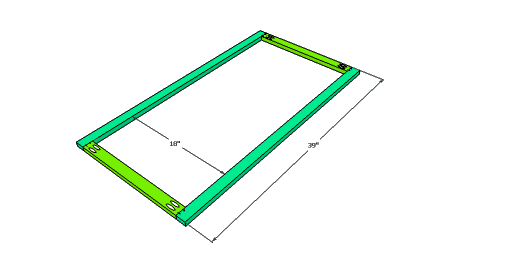
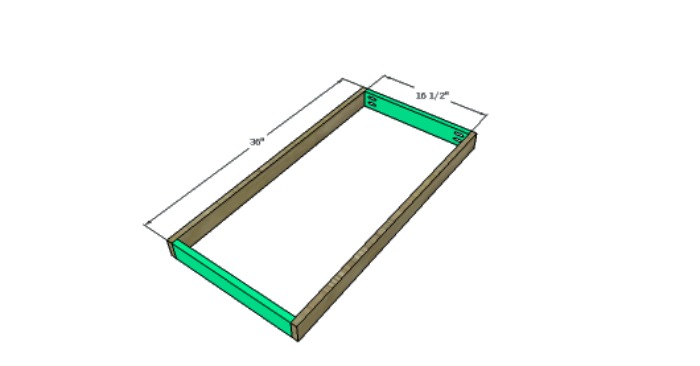
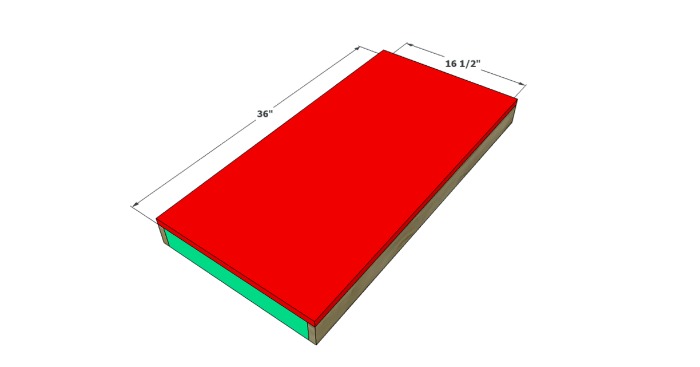
Cut the pieces for the legs and side frames. Set the Kreg jig for ¾” material and drill pocket holes in each end of the frame pieces. Position the pieces so that the outside face is flush with the outside face of the legs, then secure using glue and 1-1/4” pocket hole screws.

Cut the pieces for the stretchers. Drill pocket holes in each end then assemble as shown using glue and 1-1/4” pocket hole screws.

Step 1
Step 1
Step 2

Cut the piece for the shelf. Cut the notches using a jigsaw. Position the shelf as shown then secure using glue and 1-1/4” brad nails.

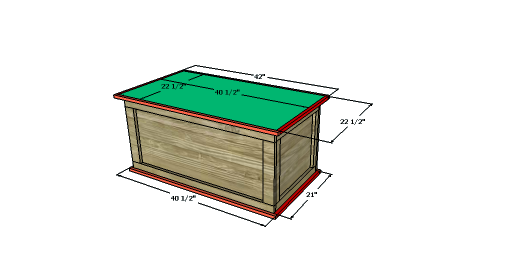
Cut the piece for the top. Secure to the table frame using glue and 1-1/4” brad nails.

Step 2
Step 2
Step 2
Step 3

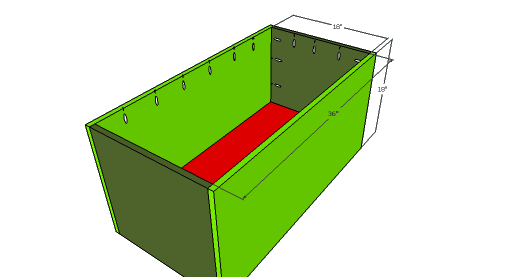
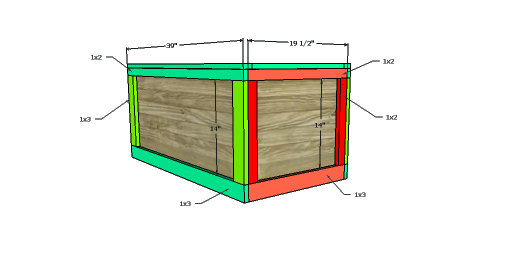
Cut the pieces for the large crate. Attach the sides to the bottom as shown using glue and 1-1/4” brad nails. Cut the notches in the front and back using a jigsaw, then secure to the sides and bottom using glue and 1-1/4” brad nails.

Step 3
Step 3
Step 4

Cut the pieces for the small crate. Assemble in the same manner as the large crate.

Step 4
Step 4
Step 5

Cut the pieces for the scale. Bore a 1” hole in the centered on the base, 1” in from the long edge. Push the dowel post in secure with a couple of brad nails from the back side of the base.

Cut the piece for the arm. Bore 1/4” holes through the top of each end approximately 1” in from each end. Cut a ½” piece of round dowel and drill a hole in the center of it, as well as in the center of the arm. Loosely attach the arm to the post with a screw through the round dowel piece and arm into the post.

Step 5
Step 5
Step 6

Cut the pieces for the scales with a jigsaw. Drill three 1/8” holes in each piece and thread a piece of cord or twine through and knot on the bottom. Gather all three pieces of cord or twine and thread through the holes in the arm. Knot to secure.

Step 6
Step 7

Cut the pieces for the canopy stand. Drill pocket holes in each end of the shorter pieces and assemble as shown. Secure the canopy supports to one end of the table using countersunk 1-1/4” screws. Cut the fabric or sheet to make the canopy and staple in place on the top.

Step 7
Step 7
Finishing Instructions

Fill any Screw, Nail or Pocket Holes, Sand and Finish as Desired. For Finishing Tips and Tricks visit my Finishing School

Disclaimer

**Disclaimer: Some rights reserved. Private use only. Feel Free to link to any of my plans so long as you provide an adequate link back to the appropriate post! Plans from this page are not to be used for commercial purposes or republished without the express written consent of Rayan Turner, The Design Confidential I hope to provide accurate plans, however, I cannot guarantee each plan for accuracy. Not every plan that I post has been built and tested, so you are building at your own risk. It is recommended that you have a clear understanding of how the project works before beginning any project. Please contact me if you find an error or inaccuracy so that I might fix it.

Project Image
Project Details

Free DIY Furniture Plans to Build a West Elm Inspired Parsons Media Tower! Not much needs to be said about the awesomeness of this collection and these pieces! Yahoo.. Xx... Rayan

Estimated Cost

$50-$75

Tools
  • Tape Measure
  • Saw – Jig, Circular, or Miter
  • Drill
  • Countersink bit for drill
  • Square
  • Sander
  • Kreg Jig 
Lumber
  • 1 – 1x3 at 8’
  • 5 – 2x2 at 8’
  • 1 - sheet of ¾” plywood
Materials
  • 1-1/4” pocket hole screws
  • 2” pocket hole screws
  • 2-1/2” pocket hole screws
  • 1-1/4” screws
  • 1 set of hinges
  • Door Pull
  • Magnetic catch for door
  • Edge banding for plywood, optional
  • Wood filler
  • Sandpaper
  • Wood glue
  • Finishing Supplies
Cut List
  • 4 – 2x2 at 3-1/2” – Legs
  • 2– 2x2 at 17” – Base Frame
  • 2 – 2x2 at 19” – Base Frame
  • 2 – 1x3 at 17” – Base Inner Frame
  • 2 – 1x3 at 17-1/2” – Base Inner Frame
  • 2 – ¾” plywood at 19-1/4” x 22” – Base Top & Bottom
  • 2 – ¾” plywood at 19-1/4” x 26-1/2” – Base Sides
  • 1 – ¾” plywood at 20-1/2” x 26-1/2” – Base Back
  • 1 – ¾” plywood at 18-1/2” x 20-1/2” – Base Shelf
  • 4 – 2x2 at 37-1/2” – Top Legs
  • 4 – 2x2 at 19” – Top Frames
  • 2 – 2x2 at 22” – Top Frames
  • 6 – 2x2 at 14” – Top Stretchers
  • 3 – ¾” plywood at 14” x 19” – Top Shelves
  • 1 – ¾” plywood at 22” x 28” – Door


Instructions

Before beginning to build, always check in on my site to make sure you have the most up to date set of plans, I occasionally update and change the plans to make the building process easier or to allow for less expensive purchasing of materials! Read through the entire set of instructions and all comments before beginning this project. If you print out or save plans, be sure to check in on my site to be sure you have the most up to date set of plans, as I occasionally update things for ease of building or buying. If you are new to building, read through the GETTING STARTED section and other articles found under the BUILD tab in the menu on my site, it has valuable information about how to get started, tools and techniques. If you are unfamiliar with the finishing process, visit my Finishing school for some tips and tricks for painting like a pro and for special finishing practices. Use glue to secure your joints and Consider Painting or Staining individual sections prior to assembling. This makes the paint application virtually flawless. Coat with a spray on Poly or Wipe on Poly to protect your finish and your piece and it will last for ages. Adhere to all safety standards and guidelines, and be sure you follow safety protocol throughout your build. If you are unsure about whether you are building safely, run a quick online search for the tool or technique you are using, or contact me via email or post to the forum before you move ahead. My contact info can be found in the menu of my site.

Step 1

If using edge banding, it will be applied to the exposed edges of the plywood before assembly.

Cut the pieces for the legs and base frame. Set the Kreg jig for 1-1/2” material and drill pocket holes in each end of the frame pieces. Assemble the frames as shown using glue and 2-1/2” pocket hole screws.

Cut the pieces for the inner frame. Set the Kreg jig for ¾” material and drill pocket holes in each end of the shorter pieces, as well as one long edge of each piece to attach the base bottom. Assemble the frame using glue and 1-1/4” pocket hole screws, then insert the frame into the base frame as shown. Secure using countersunk 1-1/4” screws.

Step 1
Step 1
Step 2

Cut the piece for the base bottom. Secure to the inner frame using glue and 1-1/4” pocket hole screws through the bottom. The back of the bottom will be flush with the back of the base frame.

Cut the pieces for the base sides and drill pocket holes as shown. Secure to the bottom using glue and 1-1/4” pocket hole screws.

Step 2
Step 2
Step 3

Cut the piece for the base back and drill pocket holes in all four edges. Attach to the sides and bottom using glue and 1-1/4” pocket hole screws.

Step 3
Step 4

Cut the piece for the shelf. Drill pocket holes in the two shorter edges as well as one long edge. Position in the cabinet as shown and secure using glue and 1-1/4” pocket hole screws.

Cut the piece for the base top and secure using glue and 1-1/4” pocket hole screws.

Step 4
Step 4
Step 5

Cut the pieces for the top frames. Set the Kreg jig for 1-1/2” material and drill pocket holes in each end of the frame pieces, as well as each end of the legs. Assemble as shown using glue and 2-1/2” pocket hole screws. Attach the frames to the base as shown using glue and 2” pocket hole screws.

Cut the pieces for the stretchers and drill pocket holes in each end. Attach as shown using glue and 2-1/2” pocket hole screws.

Step 5
Step 5
Step 5
Step 6

Cut the pieces for the shelves. Set the Kreg jig for ¾” material and drill pocket holes in all four edges of each piece. Attach to the top frames as shown using glue and 1-1/4” pocket hole screws. The top of the shelves will be flush with the top of each stretcher and frame piece.

Step 6
Step 7

Cut the piece for the door. Attach the hinges to the door, then install the door in the cabinet. Attach the magnetic catch according to the manufacturer’s instructions.

Step 7
Finishing Instructions

Fill any Screw, Nail or Pocket Holes, Sand and Finish as Desired. For Finishing Tips and Tricks visit my Finishing School

Disclaimer

**Disclaimer: Some rights reserved. Private use only. Feel Free to link to any of my plans so long as you provide an adequate link back to the appropriate post! Plans from this page are not to be used for commercial purposes or republished without the express written consent of Rayan Turner, The Design Confidential I hope to provide accurate plans, however, I cannot guarantee each plan for accuracy. Not every plan that I post has been built and tested, so you are building at your own risk. It is recommended that you have a clear understanding of how the project works before beginning any project. Please contact me if you find an error or inaccuracy so that I might fix it.

Project Image
Project Details

Free DIY Furniture Plans to Build a Pottery Barn Inspired Ava Desk! I pretty sure this gal looks good regardless of her use. Desk, end table, console... she's just gorgeous and what a simple build she is!

Estimated Cost

$25-$50

Dimensions
Dimensions for This Project
Tools
  • Tape Measure
  • Saw – Jig, Circular, or Miter
  • Drill
  • Countersink Bit for Drill
  • Square
  • Sander
  • Kreg Jig 
Lumber
  • 2 – 1x2 at 6’
  • 1 – 2x2 at 4’
  • 4 – 1x3 at 8’
Materials
  • 1-1/4” pocket hole screws
  • 2” pocket hole screws
  • 1-1/4” screws
  • 1-1/2” screws
  • One 28” x 52” piece of Plexiglas
  • Clear rubber bumpers (to place the glass on the frame)
  • Wood filler
  • Sandpaper
  • Wood glue
  • Finishing Supplies
Cut List
  •  2 – 1x2 at 20” – Frame
  • 2 – 1x2 at 42” – Frame
  • 1 – 2x2 at 39” – Stretcher
  • 4 – 1x3 at 37-5/8” – X
  • 4 – 1x3 at 17-7/8” – X
  • 4 – 1x3 at 18-1/8” - X
Instructions

Before beginning to build, always check in on my site to make sure you have the most up to date set of plans, I occasionally update and change the plans to make the building process easier or to allow for less expensive purchasing of materials! Read through the entire set of instructions and all comments before beginning this project. If you print out or save plans, be sure to check in on my site to be sure you have the most up to date set of plans, as I occasionally update things for ease of building or buying. If you are new to building, read through the GETTING STARTED section and other articles found under the BUILD tab in the menu on my site, it has valuable information about how to get started, tools and techniques. If you are unfamiliar with the finishing process, visit my Finishing school for some tips and tricks for painting like a pro and for special finishing practices. Use glue to secure your joints and Consider Painting or Staining individual sections prior to assembling. This makes the paint application virtually flawless. Coat with a spray on Poly or Wipe on Poly to protect your finish and your piece and it will last for ages. Adhere to all safety standards and guidelines, and be sure you follow safety protocol throughout your build. If you are unsure about whether you are building safely, run a quick online search for the tool or technique you are using, or contact me via email or post to the forum before you move ahead. My contact info can be found in the menu of my site.

Step 1

Cut the pieces for the Xs. Cut the angles as shown – they are NOT 45 deg angles! Set the Kreg jig for ¾” material and drill pocket holes in the shorter pieces as shown. Assemble the Xs using glue and 1-1/4” pocket hole screws maintaining the dimensions as shown. Attach two X assemblies to each other (with the pocket holes facing in) using glue and countersunk 1-1/4” screws.

Step 1
Step 1
Step 1
Step 2

Cut the piece for the stretcher. Set the Kreg jig for 1-1/2” material and drill pocket holes at each end. Attach to the center of each X assembly using glue and 2” pocket hole screws.

Step 2
Step 3

Cut the pieces for the frame. Set the Kreg jig for ¾” material and drill pocket holes in each end of the shorter pieces. Assemble as shown using glue and 1-1/4” pocket hole screws. Position the frame on the X assemblies with the pocket holes facing down and secure using glue and 1-1/2” countersunk screws.

Step 3
Step 4

Position the rubber bumpers on the frame and set the Plexiglass  on top.

Finishing Instructions

Fill any Screw, Nail or Pocket Holes, Sand and Finish as Desired. For Finishing Tips and Tricks visit my Finishing School

Disclaimer

**Disclaimer: Some rights reserved. Private use only. Feel Free to link to any of my plans so long as you provide an adequate link back to the appropriate post! Plans from this page are not to be used for commercial purposes or republished without the express written consent of Rayan Turner, The Design Confidential I hope to provide accurate plans, however, I cannot guarantee each plan for accuracy. Not every plan that I post has been built and tested, so you are building at your own risk. It is recommended that you have a clear understanding of how the project works before beginning any project. Please contact me if you find an error or inaccuracy so that I might fix it.

Project Image
Project Details

Free DIY Furniture Plans to Build a PotteryBarn Inspired Ellsworth Entertaining Cabinet! This piece has great lines and will satisfy the antique or vintage lovers of you, out there! A Modern build for the furniture lovers of a bygone era! 

Estimated Cost

$75-$100

Dimensions
Dimensions for This Project
Tools
  • Tape Measure
  • Saw – Jig, Circular, or Miter
  • Drill
  • Countersink Bit for Drill
  • Square
  • Sander
  • Kreg Jig
  • Brad nailer
Lumber
  • 2 – sheets of ¾” plywood
  • One quarter sheet of ½” plywood
Materials
  • 1-1/4” pocket hole screws
  • 1-1/4” brad nails
  • Edge banding for exposed edges of plywood
  • 2 sets of hinges
  • 2 cabinet pulls
  • Wood filler
  • Sandpaper
  • Wood glue
  • Finishing Supplies
Cut List
  • 2 – ¾” plywood at 22-1/2” x 42” – Sides
  • 1 – ¾” plywood at 42” x 46-1/2” – Back
  • 2 – ¾” plywood at 21” x 46-1/2” – Bottom & Shelf
  • 2 – ¾” plywood at 2-1/2” 27-1/4” – Front Frame
  • 1 – ¾” plywood at 1-1/2” x  41-1/2” – Front Frame
  • 1 – ¾” plywood at 2-1/2” x  41-1/2” – Front Frame
  • 1 – ¾” plywood at 21-3/4” x 46-1/2” – Top
  • 1 – ¾” plywood at 4-1/2” x 48” – Front Apron
  • 1 – ¾” plywood at 5-1/2” x 46-1/2” – Upper Shelf
  • 4 – ¾” plywood at 2-1/2” x 15-9/16” – Door Frame
  • 4 – ¾” plywood at 2-1/2” x 21” – Door Frame
  • 2 – ½” plywood at 15-9/16” x 16” – Door Panels
Instructions

Before beginning to build, always check in on my site to make sure you have the most up to date set of plans, I occasionally update and change the plans to make the building process easier or to allow for less expensive purchasing of materials! Read through the entire set of instructions and all comments before beginning this project. If you print out or save plans, be sure to check in on my site to be sure you have the most up to date set of plans, as I occasionally update things for ease of building or buying. If you are new to building, read through the GETTING STARTED section and other articles found under the BUILD tab in the menu on my site, it has valuable information about how to get started, tools and techniques. If you are unfamiliar with the finishing process, visit my Finishing school for some tips and tricks for painting like a pro and for special finishing practices. Use glue to secure your joints and Consider Painting or Staining individual sections prior to assembling. This makes the paint application virtually flawless. Coat with a spray on Poly or Wipe on Poly to protect your finish and your piece and it will last for ages. Adhere to all safety standards and guidelines, and be sure you follow safety protocol throughout your build. If you are unsure about whether you are building safely, run a quick online search for the tool or technique you are using, or contact me via email or post to the forum before you move ahead. My contact info can be found in the menu of my site.

Step 1

If using edge banding, it will be applied to the exposed edges of the plywood before assembly.

Cut the pieces for the sides. Maintaining the dimensions shown, cut the curves using a jigsaw.

Step 1
Step 2

Cut the piece for the back. Cut the curve in the bottom as shown. Set the Kreg jig for ¾” material and drill pocket holes as shown. Attach to the sides using glue and 1-1/4” pocket hole screws.

Step 2
Step 3

Cut the pieces for the shelf and the bottom. Drill pocket holes along the two shorter edges and one long edge. Secure in the cabinet as shown using glue and 1-1/4” pocket hole screws. The shelf and bottom will be positioned ¾” back from the front edge of the sides.

Step 3
Step 4

Cut the pieces for the front frame. Drill pocket holes in each end of the horizontal pieces. Assemble using glue and 1-1/4” pocket hole screws. Attach to the front of the cabinet using glue and 1-1/4” brad nails.

Step 4
Step 5

Cut the piece for the top. Drill pocket holes along the two shorter edges and one long edge. Secure in the cabinet as shown using glue and 1-1/4” pocket hole screws. Secure the top to the top of the frame using 1-1/4” brad nails.

Step 5
Step 6

Cut the piece for the front apron. Secure in place using glue and 1-1/4” brad nails.

Step 6
Step 7

Cut the piece for the upper shelf. Drill pocket holes along the two shorter edges and one long edge. Secure in the cabinet as shown using glue and 1-1/4” pocket hole screws.

Step 7
Step 8

Cut the pieces for the doors. Drill pocket holes in each end of the shorter frame pieces. Set the Kreg jig for ½” material and drill pocket holes in all four edges of the panels. Attach the shorter frame pieces to the panels using glue and 1-1/4” pocket hole screws making sure the back of the panel is flush with the back of the frame pieces. Attach the side frame pieces using glue and 1-1/4”pocket hole screws. Attach the hinges to the doors, then install in the cabinet. There will be a 1/8” gap around all sides of the door as well as in between the two. Install the cabinet pulls.

Step 8
Step 8
Finishing Instructions

Fill any Screw, Nail or Pocket Holes, Sand and Finish as Desired. For Finishing Tips and Tricks visit my Finishing School

Disclaimer

**Disclaimer: Some rights reserved. Private use only. Feel Free to link to any of my plans so long as you provide an adequate link back to the appropriate post! Plans from this page are not to be used for commercial purposes or republished without the express written consent of Rayan Turner, The Design Confidential I hope to provide accurate plans, however, I cannot guarantee each plan for accuracy. Not every plan that I post has been built and tested, so you are building at your own risk. It is recommended that you have a clear understanding of how the project works before beginning any project. Please contact me if you find an error or inaccuracy so that I might fix it.

Project Image
Project Details

Free DIY Furniture Plans to Build a West Elm Inspired Design Workshop Divided Box Component! These components are designed to work with steel shelving standards and brackets similar to these where screws can be inserted through the bottom of the bracket into the component.

I truly can't wait to see who builds this first and how they arrange their collection! 

Free DIY Furniture Plans to Build a West Elm Inspired Design Workshop Divided Box Component
Estimated Cost

$25-$50

Dimensions
Dimensions for This Project
Tools
  • Tape Measure
  • Saw – Jig, Circular, or Miter
  • Drill
  • Square
  • Sander
  • Kreg Jig
  • Brad nailer
Lumber
  • One full sheet of ¾” plywood (mainly for the length)
Materials
  • 1-1/4” pocket hole screws
  • 1-1/4” brad nails
  • Edge banding for plywood, optional
  • Screws to go through the bracket into the component – length will vary
  • Wood filler
  • Sandpaper
  • Wood glue
  • Finishing Supplies
Cut List
  •  2 – ¾” plywood at 17-1/4” x 63” – Top & Bottom
  • 4 – ¾” plywood at 7-3/4” x 17-1/4” – Sides

Instructions

Before beginning to build, always check in on my site to make sure you have the most up to date set of plans, I occasionally update and change the plans to make the building process easier or to allow for less expensive purchasing of materials! Read through the entire set of instructions and all comments before beginning this project. If you print out or save plans, be sure to check in on my site to be sure you have the most up to date set of plans, as I occasionally update things for ease of building or buying. If you are new to building, read through the GETTING STARTED section and other articles found under the BUILD tab in the menu on my site, it has valuable information about how to get started, tools and techniques. If you are unfamiliar with the finishing process, visit my Finishing school for some tips and tricks for painting like a pro and for special finishing practices. Use glue to secure your joints and Consider Painting or Staining individual sections prior to assembling. This makes the paint application virtually flawless. Coat with a spray on Poly or Wipe on Poly to protect your finish and your piece and it will last for ages. Adhere to all safety standards and guidelines, and be sure you follow safety protocol throughout your build. If you are unsure about whether you are building safely, run a quick online search for the tool or technique you are using, or contact me via email or post to the forum before you move ahead. My contact info can be found in the menu of my site.

Step 1

If using edge banding, it will be applied to the exposed edges of the plywood before assembly.

Cut the pieces for the bottom and dividers. Set the Kreg jig for ¾” material and drill pocket holes in the bottom edges only of the divider pieces. Attach to the bottom as shown using glue and 1-1/4” pocket hole screws.

Step 1
Step 2

Cut the piece for the top. Secure using glue and 1-1/4” brad nails through the top into the dividers.


Step 2
Finishing Instructions

Fill any Screw, Nail or Pocket Holes, Sand and Finish as Desired. For Finishing Tips and Tricks visit my Finishing School

Disclaimer

**Disclaimer: Some rights reserved. Private use only. Feel Free to link to any of my plans so long as you provide an adequate link back to the appropriate post! Plans from this page are not to be used for commercial purposes or republished without the express written consent of Rayan Turner, The Design Confidential I hope to provide accurate plans, however, I cannot guarantee each plan for accuracy. Not every plan that I post has been built and tested, so you are building at your own risk. It is recommended that you have a clear understanding of how the project works before beginning any project. Please contact me if you find an error or inaccuracy so that I might fix it.

Project Image
Project Details

Free DIY Furniture Plans to Build a West Elm Inspired Degraw Bench! I love the simplicity this piece has without lacking style! It would be a fabulous addition to homes with any number of styles!

Estimated Cost

$25-$50

Dimensions
Dimensions for This Project
Tools
  • Tape Measure
  • Saw – Jig, Circular, or Miter
  • Drill
  • Countersink Bit for Drill
  • Square
  • Sander
  • Kreg Jig
  • Brad Nailer
Lumber
  • 1 – 2x2 at 8’
  • 1 – 2x2 at 6’
  • 9 – 1x2 at 8’
Materials
  • 1-1/4” pocket hole screws
  • 2” screws
  • 1-1/4” brad nails
  • Wood filler
  • Sandpaper
  • Wood glue
  • Finishing Supplies
Cut List
  •  4 – 2x2 at 4 – 2x2 at 18” – Legs
  • 8 – 1x2 at 12” – Side Frames & Seat Frame
  • 4 – 1x2 at 56-1/2” – Upper Stretchers & Seat Frame
  • 3 – 1x2 at 13-1/2” – Seat Supports
  • 1 – 2x2 at 58” – Lower Stretcher
  • 16 – 1x2 at 17-3/4” – Seat Slats
  • 8 – 1x2 at 18” – Seat Slats (Center)
Instructions

Before beginning to build, always check in on my site to make sure you have the most up to date set of plans, I occasionally update and change the plans to make the building process easier or to allow for less expensive purchasing of materials! Read through the entire set of instructions and all comments before beginning this project. If you print out or save plans, be sure to check in on my site to be sure you have the most up to date set of plans, as I occasionally update things for ease of building or buying. If you are new to building, read through the GETTING STARTED section and other articles found under the BUILD tab in the menu on my site, it has valuable information about how to get started, tools and techniques. If you are unfamiliar with the finishing process, visit my Finishing school for some tips and tricks for painting like a pro and for special finishing practices. Use glue to secure your joints and Consider Painting or Staining individual sections prior to assembling. This makes the paint application virtually flawless. Coat with a spray on Poly or Wipe on Poly to protect your finish and your piece and it will last for ages. Adhere to all safety standards and guidelines, and be sure you follow safety protocol throughout your build. If you are unsure about whether you are building safely, run a quick online search for the tool or technique you are using, or contact me via email or post to the forum before you move ahead. My contact info can be found in the menu of my site.

Step 1

Cut the pieces for the legs. Cut the angle as shown using a jigsaw, bandsaw, or tapering jig on the table saw. The angled side of the legs will face toward the longer sides.

Cut the pieces for the side frames. Set the Kreg jig for ¾” material and drill pocket holes at each end. Position the pieces on the legs as shown and secure using glue and 1-1/4” pocket hole screws. The front face of the frame pieces will be flush with the outside face of the legs.

Step 1
Step 1
Step 2

Cut the pieces for the upper stretchers. Drill pocket holes in each end. Position the pieces on the legs as shown and secure using glue and 1-1/4” pocket hole screws. The front face of the frame pieces will be flush with the outside face of the legs.

Cut the piece for the lower stretcher. Secure to the lower side frame pieces using glue and countersunk 2” screws from the outside of the lower frame pieces.

Step 2
Step 2
Step 3

Cut the pieces for the seat. Drill pocket holes as shown. Also, drill pocket holes along one edge of the outer slat pieces as noted to attach the longer trim pieces. (These pocket holes are not shown.)

Position the seat on the frame and secure in place using glue and 1-1/4” brad nails through the seat pieces into the stretchers and supports.

Step 3
Step 3
Finishing Instructions

Fill any Screw, Nail or Pocket Holes, Sand and Finish as Desired. For Finishing Tips and Tricks visit my Finishing School

Disclaimer

**Disclaimer: Some rights reserved. Private use only. Feel Free to link to any of my plans so long as you provide an adequate link back to the appropriate post! Plans from this page are not to be used for commercial purposes or republished without the express written consent of Rayan Turner, The Design Confidential I hope to provide accurate plans, however, I cannot guarantee each plan for accuracy. Not every plan that I post has been built and tested, so you are building at your own risk. It is recommended that you have a clear understanding of how the project works before beginning any project. Please contact me if you find an error or inaccuracy so that I might fix it.

Project Image
Project Details

Free DIY Furniture Plans to Build a Jonathan Adler Inspired Sawhorse Dining Table! Those of you who follow along on the FB Fanpage already know that this week I have teemed up with HomeSav to bring you a Look Book filled with Jonathan Adler style! And what better way to celebrate that style than to bring you a fresh new set of plans for a table of his that is no longer available but still oh so glorious... Yahoo... Xx...Rayan!

Estimated Cost

$50-$75

Dimensions
Dimensions for This Project
Tools
  • Tape Measure
  • Saw – Jig, Circular, or Miter
  • Drill
  • Square
  • Sander
  • Kreg Jig 
Lumber
  • 4 – 1x2 at 8’
  • 3 – 1x3 at 8’
  • 1 sheet of ¾” plywood
Materials
  • 1-1/4” pocket hole screws
  • 2” screws
  • Edge banding for plywood, optional
  • Wood filler
  • Sandpaper
  • Wood glue
  • Finishing Supplies
Cut List
  • 8 – 1x2 at 30-5/16” – Legs
  • 4 – 1x2 at 12-7/8” – Leg Base
  • 2 – 1x2 at 26-1/2” – Leg Lower Stretcher
  • 6 – 1x3 at 26-1/2” – Leg Stretchers, Top Frame & Supports
  • 2 – 1x3 at 55-1/2” – Top Frame
  • 1 – ¾” plywood at 36” x 96” - Top
Instructions

Before beginning to build, always check in on my site to make sure you have the most up to date set of plans, I occasionally update and change the plans to make the building process easier or to allow for less expensive purchasing of materials! Read through the entire set of instructions and all comments before beginning this project. If you print out or save plans, be sure to check in on my site to be sure you have the most up to date set of plans, as I occasionally update things for ease of building or buying. If you are new to building, read through the GETTING STARTED section and other articles found under the BUILD tab in the menu on my site, it has valuable information about how to get started, tools and techniques. If you are unfamiliar with the finishing process, visit my Finishing school for some tips and tricks for painting like a pro and for special finishing practices. Use glue to secure your joints and Consider Painting or Staining individual sections prior to assembling. This makes the paint application virtually flawless. Coat with a spray on Poly or Wipe on Poly to protect your finish and your piece and it will last for ages. Adhere to all safety standards and guidelines, and be sure you follow safety protocol throughout your build. If you are unsure about whether you are building safely, run a quick online search for the tool or technique you are using, or contact me via email or post to the forum before you move ahead. My contact info can be found in the menu of my site.

Step 1

Cut the pieces for the sawhorse legs and base. Cut the angles at the measurements shown – note that the angles are not cut at 45 degrees! Set the Kreg jig for ¾” material and drill pocket holes in the pieces as shown. Assemble using glue and 1-1/4” pocket hole screws.

Step 1
Step 1
Step 2

Cut the pieces for the sawhorse stretchers. Drill pocket holes in each end. Secure as shown using glue and 1-1/4” pocket hole screws. The lower stretcher will be centered on the sawhorse base with the pocket holes facing down.

Step 2
Step 3

Cut the pieces for the table top, top frame and supports. If using edge banding, it will be applied to the edges of the top before assembly. Drill pocket holes in one long edge of each piece (to attach to the top) as well as each end of two of the shorter pieces to make the frame. Assemble the frame as shown using glue and 1-1/4” pocket hole screws. Secure the frame and supports  to the bottom of the table top at the dimensions shown using glue and 1-1/4” pocket hole screws.

Step 3
Step 3
Step 4

Place the table top on the sawhorses with the upper stretchers fitting into the space between the frame and supports. Secure the sawhorses in place using 2” screws through the inside of the frame

Step 4
Finishing Instructions

Fill any Screw, Nail or Pocket Holes, Sand and Finish as Desired. For Finishing Tips and Tricks visit my Finishing School

Disclaimer

**Disclaimer: Some rights reserved. Private use only. Feel Free to link to any of my plans so long as you provide an adequate link back to the appropriate post! Plans from this page are not to be used for commercial purposes or republished without the express written consent of Rayan Turner, The Design Confidential I hope to provide accurate plans, however, I cannot guarantee each plan for accuracy. Not every plan that I post has been built and tested, so you are building at your own risk. It is recommended that you have a clear understanding of how the project works before beginning any project. Please contact me if you find an error or inaccuracy so that I might fix it.

Project Image
Project Details

Free DIY Furniture Plans to Build a Pottery Barn Inspired Ava Console Table. This simple build is just so stylish, yahoo! I can't wait to see who gives this collection a try first...

Estimated Cost

$25-$50

Dimensions
Dimensions for This Project
Tools
  • Tape Measure
  • Saw – Jig, Circular, or Miter
  • Drill
  • Countersink Bit for Drill
  • Square
  • Sander
  • Kreg Jig 
Lumber
  • 2 – 1x2 at 6’
  • 1 – 2x2 at 4’
  • 3 – 1x3 at 8’
Materials
  • 1-1/4” pocket hole screws
  • 2” pocket hole screws
  • 1-1/4” screws
  • 1-1/2” screws
  • One 18” x 45” piece of Plexiglas
  • Clear rubber bumpers (to place the glass on the frame)
  • Wood filler
  • Sandpaper
  • Wood glue
  • Finishing Supplies
Cut List
  • 2 – 1x2 at 10-11/16” – Frame
  • 2 – 1x2 at 41” – Frame
  • 1 – 2x2 at 38” – Stretcher
  • 4 – 1x3 at 32-5/16” – X
  • 4 – 1x3 at 15-9/16” – X
  • 4 – 1x3 at 15-3/4” - X
Instructions

Before beginning to build, always check in on my site to make sure you have the most up to date set of plans, I occasionally update and change the plans to make the building process easier or to allow for less expensive purchasing of materials! Read through the entire set of instructions and all comments before beginning this project. If you print out or save plans, be sure to check in on my site to be sure you have the most up to date set of plans, as I occasionally update things for ease of building or buying. If you are new to building, read through the GETTING STARTED section and other articles found under the BUILD tab in the menu on my site, it has valuable information about how to get started, tools and techniques. If you are unfamiliar with the finishing process, visit my Finishing school for some tips and tricks for painting like a pro and for special finishing practices. Use glue to secure your joints and Consider Painting or Staining individual sections prior to assembling. This makes the paint application virtually flawless. Coat with a spray on Poly or Wipe on Poly to protect your finish and your piece and it will last for ages. Adhere to all safety standards and guidelines, and be sure you follow safety protocol throughout your build. If you are unsure about whether you are building safely, run a quick online search for the tool or technique you are using, or contact me via email or post to the forum before you move ahead. My contact info can be found in the menu of my site.

Step 1

Cut the pieces for the Xs. Cut the angles as shown – they are NOT 45 deg angles! Set the Kreg jig for ¾” material and drill pocket holes in the shorter pieces as shown. Assemble the Xs using glue and 1-1/4” pocket hole screws maintaining the dimensions as shown. Attach two X assemblies to each other (with the pocket holes facing in) using glue and countersunk 1-1/4” screws.

Step 1
Step 1
Step 1
Step 2

Cut the piece for the stretcher. Set the Kreg jig for 1-1/2” material and drill pocket holes at each end. Attach to the center of each X assembly using glue and 2” pocket hole screws.

Step 2
Step 3

Cut the pieces for the frame. Set the Kreg jig for ¾” material and drill pocket holes in each end of the shorter pieces. Assemble as shown using glue and 1-1/4” pocket hole screws. Position the frame on the X assemblies with the pocket holes facing down and secure using glue and 1-1/2” countersunk screws.

Step 3
Step 4

Position the rubber bumpers on the frame and set the Plexiglass  on top.

Finishing Instructions

Fill any Screw, Nail or Pocket Holes, Sand and Finish as Desired. For Finishing Tips and Tricks visit my Finishing School

Disclaimer

**Disclaimer: Some rights reserved. Private use only. Feel Free to link to any of my plans so long as you provide an adequate link back to the appropriate post! Plans from this page are not to be used for commercial purposes or republished without the express written consent of Rayan Turner, The Design Confidential I hope to provide accurate plans, however, I cannot guarantee each plan for accuracy. Not every plan that I post has been built and tested, so you are building at your own risk. It is recommended that you have a clear understanding of how the project works before beginning any project. Please contact me if you find an error or inaccuracy so that I might fix it.

Project Image
Project Details

Free DIY Furniture Plans to Build a Wisteria Inspired Recycled Pine Console!!!

Psst... I would love your support and a vote in the final round of The Homies.... Homie! Pretty Pretty Please... it means a lot to this little bloggy poo! It you don't already have an account at Apartment Therapy you will need to register but it only takes like 3 seconds and you can immediately pop over to the voting page (Best Home Project & DIY Blog) and click The Design Confidential. Seriously it's so easy and fast and means so very very much to us and the success of this site. Pretty Please Xx...Rayan

Estimated Cost

$50-$75

Dimensions
Dimensions for This Project
Tools
  • Tape Measure
  • Saw – Jig, Circular, or Miter
  • Drill
  • Countersink Bit for Drill
  • Square
  • Sander
  • Kreg Jig
  • Brad nailer
Lumber
  • 1 – 4x4 at 8’
  • 4 – 1x2 at 6’
  • 4 – 1x3 at 8’
  • 2 – 2x2 at 8’
  • 4 – 2x4 at 8’
  • One sheet of ¾” plywood
Materials
  • 1-1/4” pocket hole screws
  • 2-1/2” pocket hole screws
  • 1-1/4” screws
  • 1-1/4” brad nails
  • Edge banding for plywood
  • 4 – 5” casters
  • 8 – angle brackets for edges, optional
  • Wood filler
  • Sandpaper
  • Wood glue
  • Finishing Supplies
Cut List
  •  4 – 4x4 at 22-1/4” – Legs
  • 6 – 2x4 at 10-1/2” – Side Frames
  • 6 – 2x4 at 51-1/2” – Stretchers
  • 4 – 1x2 at 51-1/2” – Slat Supports
  • 34 – 1x3 at 10-1/2” – Slats
  • 4 – 2x2 at 13-11/16” – X
  • 8 – 2x2 at 6-1/8” – X
  • 1 – ¾” plywood at 17-1/2” x 58-1/2” – Top
Instructions

Before beginning to build, always check in on my site to make sure you have the most up to date set of plans, I occasionally update and change the plans to make the building process easier or to allow for less expensive purchasing of materials! Read through the entire set of instructions and all comments before beginning this project. If you print out or save plans, be sure to check in on my site to be sure you have the most up to date set of plans, as I occasionally update things for ease of building or buying. If you are new to building, read through the GETTING STARTED section and other articles found under the BUILD tab in the menu on my site, it has valuable information about how to get started, tools and techniques. If you are unfamiliar with the finishing process, visit my Finishing school for some tips and tricks for painting like a pro and for special finishing practices. Use glue to secure your joints and Consider Painting or Staining individual sections prior to assembling. This makes the paint application virtually flawless. Coat with a spray on Poly or Wipe on Poly to protect your finish and your piece and it will last for ages. Adhere to all safety standards and guidelines, and be sure you follow safety protocol throughout your build. If you are unsure about whether you are building safely, run a quick online search for the tool or technique you are using, or contact me via email or post to the forum before you move ahead. My contact info can be found in the menu of my site.

Step 1

Cut the pieces for the legs and the side frames. Set the Kreg jig for 1-1/2” material and drill pocket holes in each end of the frame pieces. Attach to the legs as shown using glue and 2-1/2” pocket hole screws.

Step 1
Step 2

Cut the pieces for the stretchers. Drill pocket holes in each end. Secure to the legs as shown using glue and 2-1/2” pocket hole screws.

Step 2
Step 3

Cut the pieces for the slat supports. Set the Kreg jig for ¾” material and drill pocket holes along one long edge of each piece. Attach to the middle and lower stretchers using glue and 1-1/4” pocket hole screws, making sure the bottom face is flush with the bottom face of the stretchers.

Step 3
Step 4

Cut the pieces for the slats. Attach to the supports using glue and countersunk 1-1/4” screws. There will be ½” spacing between each piece.

Step 4
Step 5

Cut the pieces for the X. Cut the angles as shown – they are NOT 45 deg angles! Draw a line at the measurement shown, then draw another line from the corner of the board to the opposite end of the line in order to make the angle.  Set the Kreg jig for 1-1/2” material and drill pocket holes in the straight edges of the shorter pieces. Maintain the dimensions shown in drawing 2 and secure using glue and 2-1/2” pocket hole screws.

Attach the X using toenailed brad nails through the X into the stretcher.

Step 5
Step 5
Step 5
Step 6

Cut the piece for the top. Secure using glue and 1-1/4” brad nails. Add the angle brackets to the upper and lower edges, if desired.

Attach the casters according to the manufacturer’s instructions.

Step 6
Finishing Instructions

Fill any Screw, Nail or Pocket Holes, Sand and Finish as Desired. For Finishing Tips and Tricks visit my Finishing School

Disclaimer

**Disclaimer: Some rights reserved. Private use only. Feel Free to link to any of my plans so long as you provide an adequate link back to the appropriate post! Plans from this page are not to be used for commercial purposes or republished without the express written consent of Rayan Turner, The Design Confidential I hope to provide accurate plans, however, I cannot guarantee each plan for accuracy. Not every plan that I post has been built and tested, so you are building at your own risk. It is recommended that you have a clear understanding of how the project works before beginning any project. Please contact me if you find an error or inaccuracy so that I might fix it.

Project Image
Project Details

Psst... I would love your support and a vote in the final round of The Homies....Homie! Pretty Pretty Please... it means a lot to this little bloggy poo! It you don't already have an account at Apartment Therapy you will need to register but it only takes like 3 seconds and you can immediately pop over to the voting page (Best Home Project & DIY Blog) and click The Design Confidential. Seriously it's so easy and fast and means so very very much to us and the success of this site. Pretty Please

Ok now back to our regularly schedule programming... These components are designed to work with steel shelving standards and brackets similar to these where screws can be inserted through the bottom of the bracket into the component. The single drawer components can be stacked and secured together…

Free DIY Furniture Plans to Build a West Elm Inspired Design Workshop Components – Single Drawer
Estimated Cost

$25-$50

Dimensions
Dimensions for This Project
Tools
  • Tape Measure
  • Saw – Jig, Circular, or Miter
  • Drill
  • Square
  • Sander
  • Kreg Jig
  • Brad nailer
Lumber
  • One half sheet of ¾” plywood
Materials
  • 1-1/4” pocket hole screws
  • 1-1/4” brad nails
  • Edge banding for plywood, optional
  • Screws to go through the bracket into the component – length will vary
  • One set of 16” drawer slides
  • Wood filler
  • Sandpaper
  • Wood glue
  • Finishing Supplies
Cut List
  •  2 – ¾” plywood at 17-1/4” x 31” – Top & Bottom
  • 2 – ¾” plywood at 7-3/4” x 17-1/4” – Sides
  • 1 – ¾” plywood at 7-3/4” x 29-1/2” – Back
  • 1 – ¾” plywood at 16” x 27” – Drawer Bottom
  • 2 – ¾” plywood at 7-1/2” x 16” – Drawer Sides
  • 1 – ¾” plywood at 7-1/2” x 29-1/4” – Drawer Front
  • 1 – ¾” plywood at 7-1/2” x 28-1/2” – Drawer Back
Instructions

Before beginning to build, always check in on my site to make sure you have the most up to date set of plans, I occasionally update and change the plans to make the building process easier or to allow for less expensive purchasing of materials! Read through the entire set of instructions and all comments before beginning this project. If you print out or save plans, be sure to check in on my site to be sure you have the most up to date set of plans, as I occasionally update things for ease of building or buying. If you are new to building, read through the GETTING STARTED section and other articles found under the BUILD tab in the menu on my site, it has valuable information about how to get started, tools and techniques. If you are unfamiliar with the finishing process, visit my Finishing school for some tips and tricks for painting like a pro and for special finishing practices. Use glue to secure your joints and Consider Painting or Staining individual sections prior to assembling. This makes the paint application virtually flawless. Coat with a spray on Poly or Wipe on Poly to protect your finish and your piece and it will last for ages. Adhere to all safety standards and guidelines, and be sure you follow safety protocol throughout your build. If you are unsure about whether you are building safely, run a quick online search for the tool or technique you are using, or contact me via email or post to the forum before you move ahead. My contact info can be found in the menu of my site.

Step 1

If using edge banding, it will be applied to the exposed edges of the plywood before assembly.

Cut the pieces for the bottom and sides. Set the Kreg jig for ¾” material and drill pocket holes in the bottom edges of the side pieces. Attach to the bottom as shown using glue and 1-1/4” pocket hole screws.

Step 1
Step 2

Cut the piece for the back. Drill pocket holes in all four edges. Secure to the sides and back using glue and 1-1/4” pocket hole screws.

Step 2
Step 3

Cut the piece for the top. Secure using glue and 1-1/4” brad nails through the top into the sides and the back.

Step 3
Step 4

Cut the piece for the drawer front. Cut the notch as shown using a jigsaw. Cut the pieces for the sides, bottom, and back. Drill pocket holes in each end of the sides as well as all four edges of the bottom. Assemble as shown using glue and 1-1/4” pocket hole screws. The front will overlap the drawer box by 3/8” on each side. Install the drawer slide hardware according to the manufacturer’s instructions. For an easy tutorial, click here. Make any necessary adjustments. The box will be placed on the shelving brackets then secured with screws through the bracket into the box.

Step 4
Step 4
Step 4
Step 4
Finishing Instructions

Fill any Screw, Nail or Pocket Holes, Sand and Finish as Desired. For Finishing Tips and Tricks visit my Finishing School

Disclaimer

**Disclaimer: Some rights reserved. Private use only. Feel Free to link to any of my plans so long as you provide an adequate link back to the appropriate post! Plans from this page are not to be used for commercial purposes or republished without the express written consent of Rayan Turner, The Design Confidential I hope to provide accurate plans, however, I cannot guarantee each plan for accuracy. Not every plan that I post has been built and tested, so you are building at your own risk. It is recommended that you have a clear understanding of how the project works before beginning any project. Please contact me if you find an error or inaccuracy so that I might fix it.

Syndicate content