Free DIY Furniture Plans to Build a Pottery Barn Inspired Printer’s Media Suite Cabinet with Drawers
$50-$75
Before beginning to build, always check in on my site to make sure you have the most up to date set of plans, I occasionally update and change the plans to make the building process easier or to allow for less expensive purchasing of materials! Read through the entire set of instructions and all comments before beginning this project. If you print out or save plans, be sure to check in on my site to be sure you have the most up to date set of plans, as I occasionally update things for ease of building or buying. If you are new to building, read through the GETTING STARTED section and other articles found under the BUILD tab in the menu on my site, it has valuable information about how to get started, tools and techniques. If you are unfamiliar with the finishing process, visit my Finishing school for some tips and tricks for painting like a pro and for special finishing practices. Use glue to secure your joints and Consider Painting or Staining individual sections prior to assembling. This makes the paint application virtually flawless. Coat with a spray on Poly or Wipe on Poly to protect your finish and your piece and it will last for ages. Adhere to all safety standards and guidelines, and be sure you follow safety protocol throughout your build. If you are unsure about whether you are building safely, run a quick online search for the tool or technique you are using, or contact me via email or post to the forum before you move ahead. My contact info can be found in the menu of my site.
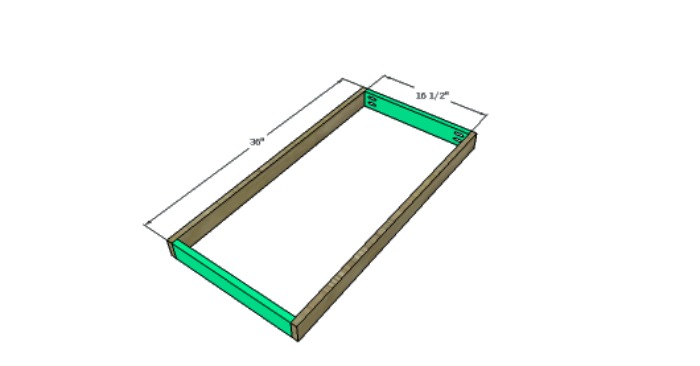
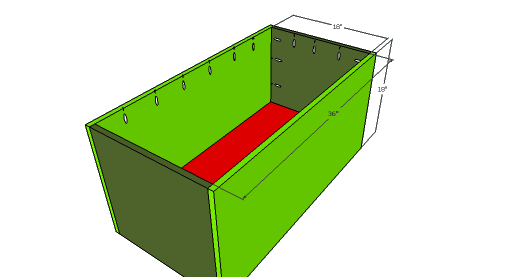
Cut the pieces for the sides. Set the Kreg jig for ¾” material and drill pocket holes in the top edge of each piece. Cut the piece for the back. Drill pocket holes in the side edges, as well as the top. Attach the sides to the back using glue and 1-1/4” pocket hole screws.
Cut the piece for the kick plate. Drill pocket holes in each end then attach to the lower front edge using glue and 1-1/4” pocket hole screws.
Cut the pieces for the shelves. Drill pocket holes in the side edges as well as the back edge and secure to the cabinet at the spacing shown using glue and 1-1/4” pocket hole screws.
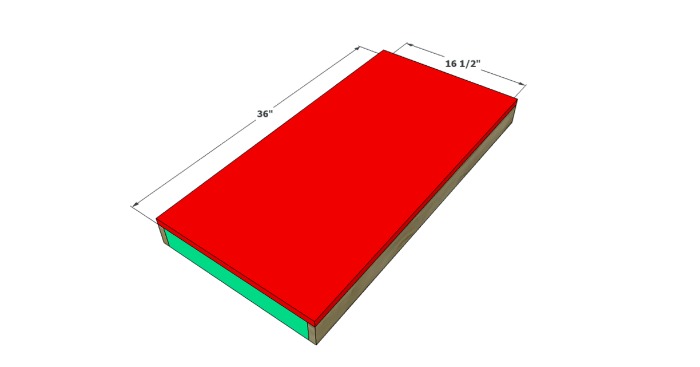
Cut the piece for the top. Attach using glue and 1-1/4” pocket hole screws through the holes drilled in the upper sides and back. The top will overlap by ¾”.
Cut the pieces for the drawer boxes. Drill pocket holes in each end of the side pieces as well as all four edges of the bottoms. Attach the sides to the bottoms using glue and 1-1/4” pocket hole screws.
Cut the pieces for the drawer box front and back. Attach the back using glue and 1-1/4” pocket hole screws.
The drawer box assembly is narrower than the drawer box front. The drawer box will be positioned ¼” from the bottom of the front as well as 3/8” in from each side. This will allow the drawer box front to have a 1/8” gap around all sides in the opening.
Install the drawer slides according to the manufacturer’s instructions and make any necessary adjustments.
Cut the pieces for the drawer fronts. Position them so that the first one starts 1/8” below the top, and there is 1/8” spacing between each piece. The pieces will overlap the sides by 3/8”. Attach using glue and 1-1/4” brad nails.
Cut the piece for the trim then attach to the lower front using glue and 1-1/4” brad nails.
Fill any Screw, Nail or Pocket Holes, Sand and Finish as Desired. For Finishing Tips and Tricks visit my Finishing School
**Disclaimer: Some rights reserved. Private use only. Feel Free to link to any of my plans so long as you provide an adequate link back to the appropriate post! Plans from this page are not to be used for commercial purposes or republished without the express written consent of Rayan Turner, The Design Confidential I hope to provide accurate plans, however, I cannot guarantee each plan for accuracy. Not every plan that I post has been built and tested, so you are building at your own risk. It is recommended that you have a clear understanding of how the project works before beginning any project. Please contact me if you find an error or inaccuracy so that I might fix it.
Free DIY Furniture Plans to Build a Land of Nod Inspired Debutante Vanity and Bench.
Psst... we will be back in just a bit to kick off our amazing week of giveaways! yay! Stay tuned and check back here for those details and for the first giveaway reveal and entry!
Edge banding should be applied to exposed edges of plywood before assembly.
Cut the pieces for the sides. Set the Kreg jig for ¾” material and drill pocket holes in each end of the apron piece. Attach to the legs as shown using glue and 1-1/4” pocket hole screws. The aprons will be centered on the legs.
Cut the piece for the back apron. Drill pocket holes in each end. Attach to the sides as shown using glue and 1-1/4” pocket hole screws. The back apron will also be centered on the legs.
Cut the pieces for the front aprons and drawer supports. Drill pocket holes in each end of the drawer supports as well as one end of the front apron. Attach the drawer support to the apron using glue and 1-1/4”pocket hole screws. There will be a left and a right piece. Attach each assembly to the sides and back as shown using glue and 1-1/4” pocket hole screws.
Cut the piece for the top. Secure to the vanity using glue and 1-1/4” brad nails through the top into the legs, aprons, and supports. The front and sides will overlap by ½”.
Cut the pieces for the drawer boxes. Drill pocket holes in all four edges of the bottom as well as each end of the sides. Attach the sides to the bottom using glue and 1-1/4” pocket hole screws, then attach the front and back in the same manner. Install the drawer slides according to the manufacturer’s instructions. For an easy tutorial, click here. Make any necessary adjustments.
Cut the piece for the drawer front. For another easy tutorial, click here.
Cut the pieces for the mirror frame and sides. Cut the arcs using a jigsaw. Drill pocket holes in the bottom edge of the mirror frame and in the sides as shown. There will be a left and right side piece. Attach the sides to the frame using glue and 1-1/4” pocket hole screws. Attach the entire frame to the vanity top using glue and 1-1/4” pocket hole screws.
Cut the mirror as shown using a glass cutter. Attach to the back side of the frame using mirror clips.
Cut the pieces for the sides of the bench. Drill pocket holes in each end of the apron pieces and attach to the legs using glue and 1-1/4” pocket hole screws. The aprons will be centered on the legs.
Cut the piece for the seat. The seat will overlap the frame by ½” on all sides. Secure to the frame using glue and 1-1/4” brad nails.
Free DIY Furniture Plans to Build Pottery Barn Inspired Modular Bar Components – Grid Hutch!
Psst... don't forget to join us here on Monday for the Really Big Giveaway kickoff! I know I usually only post once on Fridays, but I will be back in just a bit with a fabulous holiday DIY project for you all.. yahoo...
Tune in with me over the weekend on Facebook for a few sneak peaks at our giveaway prize packages for next week!
Cut the pieces for the side frames. Set the Kreg jig for ¾” material and drill pocket holes at each end of the shorter pieces.
Cut the pieces for the side panels. Set the Kreg jig for ½” material and drill pocket holes in all four edges.
Attach the shorter side frame pieces to the side panels using glue and 1-1/4” pocket hole screws. The back face of the panel s should be flush with the back face of the frame pieces.
Attach the side panel assemblies to the longer frame pieces using glue and 1-1/4” pocket hole screws.
Cut the piece for the back. Set the Kreg jig for ¾” material and drill pocket holes in the side edges, as well as the top edge. Attach to the side frames using glue and 1-1/4” pocket hole screws.
Cut the piece for the bottom. Drill pocket holes on the side edges, as well as the back edge. Attach to the side frames and the back using glue and 1-1/4” pocket hole screws.
Cut the piece for the top. The front edge will overlap by 1”. Attach using glue and 1-1/4” pocket hole screws through the holes in the top edge of the back and side panels.
Cut the pieces for the grid. Use a jigsaw to cut the notches as shown. Assemble and insert into the cabinet, then attach using 1-1/4” brad nails through the sides into the grid pieces.
Free DIY Furniture Plans to Build Pottery Barn Inspired Modular Bar Components – Grid Base
Cut the pieces for the kick plate and the stretcher. Drill pocket holes in each end of each piece. Attach as shown using glue and 1-1/4” pocket hole screws.
Cut the piece for the upper shelf & bottom. Drill pocket holes on the side edges, as well as the back edge. Attach to the side frames and the back using glue and 1-1/4” pocket hole screws.
Attach the angle inside above the upper shelf as shown using countersunk screws.
Cut the piece for the pullout. The pullout will rest on the metal angles.
Cut the pieces for the drawer box. Drill pocket holes in each end of the side pieces as well as all four edges of the bottom. Attach the sides to the bottom using glue and 1-1/4” pocket hole screws. Attach the back using glue and 1-1/4” pocket hole screws. Position the drawer assembly to the front as shown using glue and 1-1/4” pocket hole screws.
Install the drawer slides according to the manufacturer’s instructions. Make any necessary adjustments. The drawer should be positioned so that there is a 1/8” gap around all sides of the front.
Cut the piece for the trim. Attach to the lower front using glue and 1-1/4” brad nails.
Free DIY Furniture Plans to Build Pottery Barn Inspired Modular Bar Components – Shelf Hutch. The perfect topper for this piece...
Cut the pieces for the shelf and the bottom. Drill pocket holes in the side edges as well as the back edge of each piece. Attach to the sides and back as shown using glue and 1-1/4” pocket hole screws.
Free DIY Furniture Plans to Build Pottery Barn Inspired Modular Bar Components – Cabinet Base
Cut the piece for the center shelf. Drill pocket holes in the side edges as well as the back edge. The shelf will be set back ¾” from the front edge of the cabinet.
Cut the pieces for the door frame. Drill pocket holes in each end of the shorter frame pieces.
Cut the piece for the door panel. Set the Kreg jig for ½” material and drill pocket holes as shown. Attach the shorter door frame pieces to the panel using glue and 1-1/4” pocket hole screws. The back face of the panel should be flush with the back face of the frame pieces.
Attach the panel assembly to the longer frame pieces using glue and 1-1/4” pocket hole screws.
Install the hinges according to the manufacturer’s instructions and make any necessary adjustments.
If you need something fabulous for your furry friends this holiday season, then this Free DIY Furniture Plan to Build a Town Haus Inspired Doggie Den is just the thing for you!
Psst... If you would like to celebrate the holidays a tad early with a full week of giveaways, from me (and some lovely sponsors) to you, then please check in daily for more information and a giveaway schedule... I would hate for you to miss out on the fun! Xx...Rayan
Cut the pieces for the side frames. Set the Kreg jig for ¾” material and drill pocket holes at each end of the shorter 1x3 pieces and the 1x6 piece.
Attach one set of the shorter side frame pieces to the side panels using glue and 1-1/4” pocket hole screws, then attach the 1x6 pieces in the same manner. The back face of the panels should be flush with the back face of the frame pieces.
Attach the side panel assemblies and the remaining 1x3 frame pieces to the longer frame pieces using glue and 1-1/4” pocket hole screws.
Cut the pieces for the bottom. Drill pocket holes in the side edges as well as the back edge. Attach to the sides and back as shown using glue and 1-1/4” pocket hole screws.
Cut the pieces for the stretchers. Drill pocket holes in each end and attach as shown using glue and 1-1/4” pocket hole screws.
Cut the pieces for the door frame. Drill pocket holes in each end of the shorter pieces.
Cut the piece for the door panel. Set the Kreg jig for ½” material and drill pocket holes in all four edges.
Attach one set of the shorter side frame pieces to the side panels using glue and 1-1/4” pocket hole screws. The back face of the panels should be flush with the back face of the frame pieces.
Attach the door frame assembly to the longer frame pieces using glue and 1-1/4” pocket hole screws. Install the hinges according to the manufacturer’s instructions. Make any necessary adjustments so that the door has a 1/8” gap around all sides in the opening. Install the cupboard catch.
If desired, cut and attach the decorative aluminum in the opening using the turnbuttons and screws.
Cut the piece for the top. The edges will overlap by 1/2”. Attach using glue and 1-1/4” brad nails through the top into back and side panels, as well as the upper stretcher.
Cut the pieces for the trim. Attach the side pieces first, using glue and 1-1/4” brad nails, then attach the front and back pieces.
ATTENTION: We will be celebrating something fabulous the first week of December for a little early Holiday Appreciation of you all... Stay tuned for more details and be sure to check in daily for updates and instructions on particpating! I will be including details on our regularly scheduled posts (just like this),. You never know when something interesting will Pop Up, so be sure to check in often.
And now back to our regularly scheduled programming and Free DIY Furniture Plans to Build an X Coffee Table - Xx...Rayan
$25-$50
Cut the pieces for the legs. Cut the bevels in the legs using a miter saw or jigsaw. Set the Kreg jig for 1-1/2” material and drill pocket holes in the straight ends of the shorter pieces. Assemble as shown using glue and 2”pocket hole screws.
Cut the pieces for the shelf supports. Position as shown, then attach using glue and countersunk 2-1/2” screws through the legs into the ends of the supports.
Cut the pieces for the top. Spread glue over the face of one of the pieces and position the other on top. Wiggle the top piece to create suction then clamp together until dry. Attach the legs using toenailed screws through the ends of the legs into the top.
Cut the piece for the shelf. Cut a 45 deg. bevel along each long edge using a circular saw or table saw. Attach to the supports using glue and countersunk 1-1/2” screws.
Cut the pieces for the shelf legs. Drill pocket holes in one end of each piece. Attach to the underside of the shelf using glue and 2” pocket hole screws.
Free DIY Furniture Plans to Build a Ballard Designs Inspired Sarah Shoe Storage
$75-$100
Cut the pieces for the sides and the shelves. Set the Kreg jig for ¾” material and drill pocket holes at each end of the shelf pieces. Set seven of the shelf pieces off to the side for the cubbies. Attach the shelves to the sides at the spacing shown using glue and 1-1/4” pocket hole screws.
Cut the piece for the back. Attach to the cabinet with glue and 1-1/4” brad nails.
Cut the pieces for the trim. Cut a fancy curve or design of your choice in the 1x4 pieces and attach to the 1x2 with glue and 1-1/4” brad nails. The face of the trim pieces will be flush with one of the edges of the 1x2.
Attach the trim assembly to the cabinet top and bottom with glue and 1-1/4” brad nails.
Cut the notches in the shelves for the cubbies as shown with a jigsaw. Attach to the sides at the spacing indicated using glue and 1-1/4” pocket hole screws.
Cut the pieces for the dividers. Cut the notches as shown using a jigsaw. Attach to the cabinet with glue at the spacing indicated and add a few brad nails through the shelf into the dividers.
Free DIY Furniture Plans to Build a Restoration Hardware Inspired Dutch Shipyard Media Cabinet *** Inspiration piece is constructed of metal ***
Cut the pieces for the legs and the side frames. Set the Kreg jig for ¾”material and drill pocket holes in each end of the frame pieces. Attach to the legs using glue and 1-1/4” pocket hole screws. The front face of the frame pieces will be flush with the outside face of the legs.
Cut the piece for the back. Drill pocket holes in each of the shorter edges of the back piece. Attach to the legs using glue and 1-1/4” pocket hole screws. The outside face of the back will be flush with the outside face of the legs.
Cut the pieces for the stretchers and drill pocket holes in each end of each piece. Attach to the legs as shown using glue and 1-1/4” pocket hole screws. The front face of the stretchers should be flush with the front face of the legs.
Cut the piece for the shelf. Cut ¾” x ¾” notches in each corner with a jigsaw. Drill pocket holes on the underside and attach as shown using glue and 1-1/4” pocket hole screws. The top of the shelf will be flush with the top of the lower stretcher and frame pieces.
Cut the pieces for the dividers and cut a ¾” x ¾” notch at the top front edge of each piece. Drill pocket holes as shown. Attach at the spacing indicated using glue and 1-1/4” pocket hole screws.
Cut the piece for the top. Cut ¾” x ¾” notches in each corner with a jigsaw. Drill pocket holes on the underside and attach as shown using glue and 1-1/4” pocket hole screws. The top face of the top will be flush with the top of the upper stretcher and frame pieces.
Cut the pieces of angle using a hacksaw. Pre-drill holes in each piece and mount to the inside of the cabinet at the spacing shown using ¾” screws.
Cut the pieces for the pullouts and insert in the proper openings.
Cut the pieces for the drawer boxes. Cut the notch in each of the front pieces using a jigsaw. Drill pocket holes in all four edges of the bottom as well as each end of the sides. Assemble as shown using glue and 1-1/4” pocket hole screws.